
First Time in Corsica : Where to Start, What to Pack, What to Skip
Corsica is one of those destinations that people keep putting off. Too complicated to get to, too expensive, too crowded in summer – or so they say. Frankly, most of that is either exaggerated or easily avoidable with a bit of planning. If you’re reading this, you’re probably thinking about going for the first time and wondering where to even begin. Good. Let’s make this practical.
The island has a reputation for being wild, beautiful and slightly overwhelming to organise. Websites like campcorse.com are genuinely useful if you’re considering camping – which, by the way, is one of the best ways to experience Corsica without spending a fortune.
Which part of Corsica should you visit first ?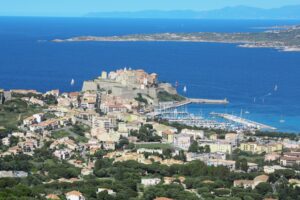
Corsica is bigger than most people expect. It’s about 180 km long, and the roads are slow – sometimes painfully so. You’re not going to see the whole island in one trip, and honestly, you shouldn’t try.
For a first visit, I’d suggest focusing on one region rather than rushing across the whole island. Three main options depending on what you’re after :
The south (Porto-Vecchio, Bonifacio, Figari area) – This is where you’ll find the most famous beaches. Palombaggia, Santa Giulia, Rondinara. The water is genuinely extraordinary, that turquoise-green colour you’ve seen in photos. It’s also the most touristy part in high season, which is both a pro and a con. Infrastructure is better, but it’s busier.
The west coast (Porto, Calanche, Girolata) – More dramatic, more rugged. The Calanques de Piana are a UNESCO-listed landscape and completely worth it. The drive along the D81 is spectacular and terrifying in roughly equal measure. Less beach holiday, more adventure.
The north (Bastia, Cap Corse, Balagne) – Often overlooked by first-timers. Cap Corse is a narrow peninsula with a very different feel – quieter villages, local wine, almost no mass tourism. Balagne has beautiful hill towns like Sant’Antonino and some good beaches around Calvi and L’Île-Rousse.
My honest take ? If this is your first time and you want a bit of everything – beach, scenery, decent food options – start in the south and take one day trip toward the interior or the west.
When is the best time to go to Corsica for the first time ?
This matters a lot, and most articles are vague about it. Here’s the reality :
July and August – Extremely busy. Roads are jammed, parking at beaches is a nightmare, prices for accommodation double or triple. The heat can be brutal inland (40°C is not unusual). If you’re flexible, avoid it.
June and September – The sweet spot. Sea is warm enough (around 22–24°C in June, still lovely in September), crowds are manageable, prices are lower. September especially is underrated – the summer heat is gone, the water is still great, and you’ll actually be able to park near a beach.
May – Beautiful weather, maquis in bloom (that distinctive mix of rosemary, cistus, lavender that covers the hillsides), much fewer tourists. The sea is cooler (around 18–19°C) but perfectly fine for swimming if you’re not a complete wimp about it.
October onwards – Many things start closing down. Some campsites and restaurants shut from mid-October. You can still visit but you need to plan more carefully.
How do you get to Corsica ?
Two options : fly or take the ferry.
Flying is the obvious choice for most visitors. The main airports are Ajaccio (the capital), Bastia (north), Figari (south, closest to Porto-Vecchio) and Calvi (northwest). Figari is the most convenient for a southern beach holiday. Flights from mainland France take about an hour ; from other European cities, direct routes exist but vary by season.
The ferry is slower but makes more sense if you have a car – which in Corsica, you almost certainly need. Ferries run from Nice, Marseille, Toulon, Genoa and Livorno. The Nice–Bastia crossing is around 6 hours ; Toulon–Ajaccio can be overnight. Companies include Corsica Ferries, La Méridionale and Corsica Linea.
Do you need a car in Corsica ? Yes, almost certainly. Public transport exists but it’s limited and slow. The bus network connects main towns but nothing more. Without a car, you’re essentially stuck near wherever you’re staying. Rent one on the mainland if you’re taking the ferry – it’s usually cheaper than renting on the island.
What’s the budget for a week in Corsica ?
Corsica is not a cheap destination. But it’s manageable if you’re smart about it.
Rough estimates per person per day :
Camping with your own tent : €15–30 for a pitch at a decent campsite. Add food and you’re at €40–60 per day total if you cook most meals yourself.
Mid-range accommodation (small hotel or holiday rental): €80–150 per night for a room in high season, less in shoulder season. Split between two people, it’s more reasonable.
Eating out : Menus (set meals) at lunch are your friend – typically €15–20 for a two-course meal including a drink. Dinner is more expensive, especially near tourist beaches. A basic restaurant meal in the evening is €25–40 per person with wine.
Petrol : budget around €50–70 per week depending on how much you drive. The roads are slow and winding, so you use more fuel than expected for the distances.
Beaches are free. Parking near popular beaches in summer often isn’t – budget €5–10 per day.
What to avoid on your first trip to Corsica
A few things that will save you frustration :
Don’t try to cross the island in one day. Google Maps will tell you it’s 2 hours from Bastia to Ajaccio via the interior. It’s more like 3.5 to 4 in practice. The mountain roads are narrow, often single-lane, occasionally blocked by cattle or falling rocks. Not a joke.
Don’t skip the interior. The coastline gets all the attention but the interior – the Niolo valley, the Restonica gorge near Corte, the Col de Verghio – is spectacular in a completely different way. Even one day trip inland changes your whole impression of the island.
Don’t assume everywhere is open in shoulder season. Some villages have exactly one restaurant and it closes on Tuesdays. Check ahead, especially in May and October.
Don’t underestimate the maquis. That dense scrubland that covers most of the island is beautiful and also a genuine fire risk in summer. Don’t park on dry grass, don’t barbecue outside of designated areas, don’t smoke in forested areas. Fires are a serious issue in Corsica.
Don’t ignore the cultural side. Corsica has its own language, its own music, its own food. Charcuterie (lonzu, coppa, figatellu), chestnut-based products, brocciu cheese, Patrimonio wine – this stuff is genuinely good and very local. Try it.
Is Corsica worth it for a first Mediterranean trip ?
Honestly ? Yes. It’s more effort to organise than, say, a beach week in Mallorca. The roads are harder, the logistics more complex, and it’s not cheap. But the landscape is in a different league. The mountains dropping straight into the sea, the clarity of the water, the fact that you can still find beaches that aren’t completely overrun – it earns it.
Go in June or September. Get a car. Don’t try to see everything. Pick one part of the island and go deep rather than wide. That’s the version of Corsica that’ll make you want to come back.
Your First Camping Trip: The Complete Checklist So You Don’t Forget Anything
Your First Camping Trip : The Complete Checklist So You…